
Le bateau des
derniers
Mohicans
"Quand ils sont venus chercher les communistes, je
n'ai rien dit.
Je n'étais pas communiste.
Quand ils sont venus
chercher les syndicalistes, je n'ai rien dit.
Je n'étais pas
syndicaliste.
Quand ils sont venus chercher les Juifs, je n'ai rien
dit.
Je n'étais pas Juif.
Quand ils sont venus chercher les
catholiques, je n'ai rien dit.
Je n'étais pas catholique.
Puis ils
sont venus me chercher.
Et il ne restait plus personne pour
protester..."
Martin Niemoller
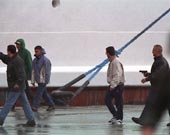 |
Ce jour là le ciel était bleu à La Goulette. Un bleu
grisâtre. Un bateau somptueux d'un blanc éclatant attendait sa dernière
cargaison de passagers. Les drapeaux du paquebot Al Habib s'agitent comme
des mains qui font des signes d'adieu. Le capitaine du navire, dans une
tenue d'apparat impeccable, s'apprête à accueillir l'ultime livraison des
déchets du 26 mai 2002.
La Tunisie, pays exportateur par excellence,
vient de délivrer à l'Europe la dernière cargaison de "lépreux" tunisiens.
Inutile d'énumérer toute la liste des voyageurs. Ce sont pour la plupart
des comètes qui ont brusquement apparu puis disparu du ciel tunisien : un
poète égaré, un journaliste-écrivain lunatique, une éditrice sans maison
d'édition, un juge sans greffier ni assesseurs, une avocate en robe noir,
comme pour marquer son deuil, accompagnée par son compagnon de route, un
résistant dont les nerfs ne pouvaient plus résister, un avocat des pauvres
brisé et appauvri et un historien qui vient signaler par son départ qu'un
cycle de l'Histoire vient de s'achever.
Depuis l'approbation de la
nouvelle loi sur le patriotisme, ces "traîtres de la Patrie", ces
"marginaux qui s'excluent de la nation", seront dans quelques minutes
définitivement et littéralement exclus de la nation. Il ne faut pas leur
en vouloir, ni leur reprocher d'avoir abandonné le bateau alors qu'il
commençait à prendre de l'eau. Sans exagération aucune, s'ils restaient,
ils risqueraient de mourir de faim. Depuis l'entrée en vigueur de la loi
en question, tout Tunisien qui entre en contact avec eux, même de façon
indirecte, risque un an de prison ferme, une lourde amende et le contrôle
administratif pendant cinq ans, sans parler de la perte automatique de
l'emploi. La loi interdit en outre aux épiciers, aux bouchers, aux
poissonniers, aux marchands de légumes, aux restaurateurs, aux hôteliers
et mêmes aux coiffeurs et coiffeuses de les servir. La loi est formelle et
incontournable. Nul n'est censé ignorer la loi.
La vie de cette bande
de marginaux, marqués sur le dos par une étoile jaune invisible, devenait
chaque jour intenable. Ils sont abandonnés par leurs voisins, boudés par
leur proches, harcelés par les CQ (comités de quartier), malmenés par des
"inconnus", menacés par des "anonymes", intimidés par les SS, épiés nuit
et jour par les grands yeux et les fines oreilles de Big Brother et
régulièrement visités par les "visiteurs de la nuit". Ils sont même
devenus des "sans papiers". Par pure coïncidence, toutes leurs pièces
d'identité ont été "perdues" en même temps. Plus de carte d'identité, plus
de passeport, plus de permis de conduire. Pas question d'obtenir de
nouveaux papiers, car la loi interdit aux fonctionnaires de l'Etat de les
servir et même de les recevoir. En outre, les fonctionnaires de l'état
civil, exécutant des ordres venus d'en haut, avaient arraché et brûlé les
feuilles du Registre Civil qui concernent les "lépreux". Ils peinent
maintenant à prouver qu'ils existent réellement.
Grâce aux pressions
incessantes de quelques ONG européennes et nord-américaines et après moult
tractations diplomatiques, le bey de Tunis a concédé le départ des "brebis
galeuses". L'Allemagne, la Belgique, le Canada, la France et la Suisse
auront chacun son quota de "lépreux" tunisiens. La police des frontières,
qui enregistre chaque entrée et chaque sortie du territoire, a transmis un
chiffre ultrasecret au bey de Tunis : Depuis la date du référendum il y a
eu exactement 16 642 départs définitifs.
Depuis qu'on a baissé les
rideaux du théâtre du 26 mai, les journalistes et les médias se sont
complètement désintéressés de ce petit pays insignifiant. La vie politique
et sociale vient d'entrer dans une phase d'hibernation d'au moins 12 ans.
Le spectacle qu'offre le pays ressemble au début d'un western de Sergio
Leone, un paysage lunaire où l'on n'entend que le sifflement du vent. Le
sifflement des balles viendra après.
Le spectacle est officiellement
clos le 27 mai. "Circulez ! Y a plus rien à voir". Au revoir, Messieurs
Dames, notre prochain rendez-vous est fixé pour octobre 2014.
Omar Khayyâm

Proxy N°12
مــقــاومـــة
إرهـــاب
الــدّولــة بــالـضّـحـك
"
عندما جاءوا لأخذ القوميّين, لم أهمس بكلمة.
فأنا لست قوميّا.
عندما
جاءوا لأخذ اليساريّين, لم أحرّك ساكنا.
فأنا لست يساريّا.
عندما جاءوا
لأخذ الإسلاميّين, لم أرى مانعا.
فأنا لست إسلاميّا.
و عندما جاءوا
لأخذ ما تبقّى لم يجدوا أحدا."
التّونسي بتصرّف عن مارتين
نيمولر.
 |
حلّ عينيك يا بهيم و أغزر قدّامك راني
نلبس 39 في اليمين و 41 عاليسار؟
سامحني عيّش خويا راهو مخّي سارح, من
نهار الإستفتاء و أنا مش قدّ بعضي, كان تحبّ هاي شلاكتي هزّ فرّغ فيها قلبك و
رجّعهالي غدوة؟
سامحني نشعّل... سامحني قدّاش التّعديل... سامحني نعمل
غطسة... هذاكا آش حفظتوا التّوانسه. ما عاد ناقص كان وزير الدّاخليّة يطلعنا
في التلفزة و يقول: سيّداتي, أوانسي, سادتي سامحوني راني غلطت في حساباتي و
راهو الإستفتاء كلى كبّوط؟ و إلا يجيبوا رءوف كوكه يقولنا: إبتسم إنّها
كاميرا خفيّة من وزارة الدّاخليّة!
بجاه ربّي فوتني بمحطّة و طيّش عليك
ماللّوغة المضروبة هاذي, مافالحين كان في المزمّرين آما زعبع كيف يبوللكم على
قدركم حتّى... آش يقول فمّي... ما تتحرّكلو شعرة!
أسمع ننبّه عليك,
إحترم روحك خيرلك, أنا الزعبع متاعك هذا لا إنتخبتو و لا إستفتيتو؟!
أمّالا ال% 99.52 جابها مالواد؟ زعمه مش مالقوادة متاعك يا دستوري يا
حقير؟
و على كلمة يا دستوري يا حقير ركح فيها الخنيفري والغبرة طلعت
عجاجة وقريب طاحت روح كان مش حزّوهم زوز ولاد حلال متعدّيين
بالصّدفة.
أيّا صلّيو على النبيّ, أسمع شدّ إنتي هذاكا و أتو نتلها
أنا بالآخر.
لا شدّ إنتي هذاكا و أتو نتلها أنا بالآخر, تحبّ تعدّيها
عليّا على خاطر حوايجو موسّخة بالدّم.
غريبة فيكم العرب! ديما مخاخكم
تخدم.
مش ديما كان تحبّ الحقّ, و إلا آش خلاه واحد بجّ كيف الكاري في
قصر قرطاج يضحك علينا!
و في نفس الوقت اللّي الحزّازة لاهيين يحكيو
فيه عالصحّة النّفسويّة و الرّوح المعدنيّة متاع الرّعيّة الزّوز الأخرين
عاودت لحمت بيناتهم تقولش عليهم يقسمو في حرثة و إلا في ورثة و إلا لاعبين
ورقة بروموسبور شركة... و في عوض يريّضوا وخيّانهم زادو الحزّازة حتّى هوما
على ما بيها و الطّايح و لّى أكثر مالواقف بعد اللّي الأوّل طلع UGTE و الآخر
UGET و ماتفاهموش في شكون باع الجامعة للدّساترة بالتستسهيلات في الدّفع! و
إسمع ياللّي ما تسمعش اللّي يجي يحزّ يلقى روحو من حيث لا يدري ياخو في
ماتيسّرلو مالجرادق و المشطة و النّبي مولاك! و برّى شوف شكون باش يفصلها
حتّى هي القلوب معبّية لين ما عادش و شدّوا من خشمو يموتوا جيرانو و
الحيوانات الأليفة متاعو.
و إيجى يازمان برّى يازمان العركة كبرت و
كلّ واحد جاب ولاد عمّو و ولاد حومتو و عمّالو بالخارج باش ينصروه عالقوّادة
الدّساترة متاع % 99.52 لين الأخبار وصلت للقصر و الرّئيس طلب مجلس وزاري
مضيّق...
آش فمّه؟ شبيكم؟ آشكون؟ كيفاش؟ حوز من غادي... آش يقولولها
الرّحمة لا... معا من أجل آش يقولولها تونس...
من فضلك سي الزّين أعمل
مرّه في حياتك جملة مفيدة و إحترملي روحك ماناش في مركز شرطة!
إيجى
ياعبد الوهّاب متاع العبد الله آش سمّاك ربّي أعملو معناها وحده هذيكه
مفيدة؟
يا سي المهنّي الرّئيس يحبّ يعرف شبيها البلاد خايضة؟
آش
دخّلني ياخي قالك عليّ لاهي بالأمن أنا؟ مالأول تفاهمنا أنا جوّي و شيختي كان
البوليسيّة متاع المرور و لجان اللّي مازالو أحياء و الصنادق بجميع أنواعها
من القرع و البطاطا متاع مارشي القرو حتّى للإستفتاء.
آش قال معناها
البهيم قدم قرعة آش بيه... تي وينو السّخطة معناها دالي... تي هذاكا اللّي
ولدو ينشّط في آش يقولولو الأحد متاع راجل بنتي متاع الكورة... شيبوب
الرّياضي.
تقصد محمّد علي القنزوعي سي الزّين هاني قاعد بحذاك!!!
و
الله لا عرفتك ياهمّ آشبيه وجهك آش يقولولو أصفر مشى في بالي سفير آش إسمها
الصّين عاصمة اليابان و إلا هي كوريا كان صدّقني ربّي.
سيّدي الرّئيس
بجاه ربّي إكبس روحك شويّه و إلا أعتقني خلّيني نمشي نحلّ عيادة على روحي و
ندبّر راسي راهي البلاد تعبّات بالمرضى مالهزّان و النّفضان متاعك.
ريح
السدّ يا خي تسخايل روحك آش يقولولو شاد آش يقولولها السّماء لا تطيح علينا؟
أما بالحرام لاني مسيّبك باش نحطّك آش يقولولو آش يقولولها وزير نتاع آش
يقولولها الداخليّة من هنا لعام 2014 باش تنحّي آش يقولولها البلادة
والرّكاكة نتاعك.
وأنا سي الزّين وقتاش باش تعيّني سفير في
إيطاليا؟
أسمع يادالي ولدي إنتي دوسيك محمّم و عندك سوابق و آش يقولولهم
الخونة نتاع آش يقولولو الوطن يحبّوا يقبّضوا عليك حيّ و إلا ميّت عاد أهوك
أقعد بحذايا عبارة على معناها سفير إيطاليا لدى آش يقولولها تونس خيرلك.
يا و الله عوج بجاه ربّي نرجعو لموضوعنا خير!!! يا دالي بجاه الأمّيمة سلّفني
شويّه حنوشة خلّي نفضّ هالحكاية و نقصّوها راهي البلاد ماكلة بعضها.
باهيش توّه, هكّه يا مهنّي خويا تعرفني راجل توّه كان جا عندي بوليسيّة بزايد
نشدّهم عليك!؟ راهم وسخ الدّنيا.
أمّالا وينهم هذوكا آش يقولولهم الميا
واشي ثلاثين ألف آش يقولولها شرطة في خدمة معا من أجل آش يقولولها
تونس!!!
آشنوّه مهنّي أشبيك حتّى إنتي آش يقولولو بات مع الجران صبح آش
يقولولو يقرقر؟! يا سيدي العصيفرات بعثناهم لبوسالم يحصروا في هاك الثلاثين
واحد متاع المجتمع المدني اللّي يحبّوا يحرّروا جندوبة.
آش فمّه؟ شبيكم؟
آشكون؟ كيفاش؟ 30 باعثلهم 130.000!!! قولّي حتّى فرق الكلاب مشاو معاهم؟
ريّض روحك سي الزّين هوما أكثر من 30 أما ربّي يهديه الصّحافي البلجيكي
بودوان لوس دخّلني بعضي بالأسئلة متاعو و ضحّك علينا الخلق!
معناها هوما
أكثر و إلا معناها هوما أقلّ؟ آش يقولولها المعارضة, المعارضة بالرّسمي؟
أكثر من أقلّ ماكنّا نتصوّروا سيّدي الرّئيس.
أسمعني يا آش سمّاك ربّي
بلّ لحية الحبيب متاع الخارجيّة متاع وذني هالوحدة نتاع آشنيّه الدّبلوماسية
ما تاكلش معايا! قدّاش ثمّه من معارض في آش يقولولها تونس؟؟؟
إيجى توّ
نقولك في وذنك, أسرار دولة...
الرّاجل طاح ما في عينو بلّة تقولش ضربو
قطار العيد و إلا طاحت عليه دار التجمّع بالملاسين و كان موش عملولو حزب لطيف
آخر (كيف الوحدة الشّعبيّة مثلا) و ذكّروه بالحصانة الأبديّة متاع 26 ماي
2002 راهو هزّ شلّاقاتو و ملّاقاتو و مشى طلب اللّجوء السّياسي في أضمن بلاصة
في العالم: المغاور متاع آش يقولولهم... آش يقولولها نتاع مقاومة الإرهاب
الأمريكاني تسشمها الوحدة هاذيكه متاع بن لادن؟ آش يقولولها قندهار نتاع
أفغانستان...
نداء عاجل إلى ذوي
البرّ و الإحسان و إلى كل أحرار العالم:
آش
يقولولو التّونسي متاع آش يقولولها التّونيزين في حالة يرثى لها و بدا يهزّ و
يصبط على خاطر باش يزيد يقعد على قلبو آش يقولولو زين العابدين بن علي شهر
زعبع 12 عام أخرين على الأقلّ فالرّجاء ممّن يعثر عليه أن يقوم بتسليمه إلى
أقرب مركز شرطة قبل ما يعمل في روحو بعض الحاجة و السّلام.
التّونسي متاع
التّونيزين
الجمعة, 31 ماي 2002
الذي كان موافق و أصبح بفعل فاعل معارض
للجمعة, 20 ربيع الأول
1423.
Un référendum «téléguidé» en
Tunisie
Réélection assurée de Ben Ali
Un amendement de la constitution tunisienne par voie de référendum, a été approuvé par 99,50% des voix, dimanche. Théoriquement, le résultat assure au président Ben Ali le pouvoir jusquen 2014.
Alger, 27 mai
Le général Ben Ali, arrivé au pouvoir en
1987 grâce â un «coup dEtat médical» dirigé contre le sénile président
Bourguiba, a gagné dimanche dernier le référendum sur un amendement de la
constitution qui assurera sa réélection. Il a reçu 99,50% des voix, un
taux qu ne surprend pas dans la Tunisie de Ben Ali. Le taux de
participation a atteint, selon les sources officielles, 95,60%. Quatre
partis de lopposition représentés au parlement se sont prononcés, en
connaissance de cause, pour la réélection de Ben Ali. Un cinquième parti
dopposition na pas participé à la campagne électorale. Lopposition
hors-parlement et plusieurs ONG avaient appelé au boycott du référendum,
mais elles navaient pas eu la possibilité de sexprimer dans les médias
tunisiens, strictement contrôlés par le pouvoir en place. Pourtant, les
deux pétitions contre le référendum ont accueilli des centaines de
signatures.
Immunité à vie
Les ministres de Ben Ali et lomniprésent parti du président, le Rassemblement constitutionnel démocratique, avaient mené une campagne au nom de la «République de demain», du «pluralisme» et de la «démocratie libérale». Dimanche dernier à Tunis, la police a confisqué le matériel de journalistes étrangers de la télé et de la radio, alors quils étaient en train de filmer aux abords de la prison où est incarcéré le dissident communiste Hammami, qui purge une peine de trois ans. En 1988, Ben Ali avait aboli la présidence à vie, instaurée par Bourguiba en 1975. Avec ce référendum il la réintroduit de facto. La constitution modifiée ne limite plus le nombre des mandats présidentiels. Jusquici, les mandats présidentiels étaient limités à trois, ce qui aurait rendu impossible la réélection de Ben Ali en 2004. En même temps, lâge limite du président a été ramené de 70 à 75 ans, de façon à ce que «Ben à vie», comme on lappelle maintenant à Tunis, puisse rester au pouvoir, théoriquement, jusquen 2014. Les opposants au régime, qui vivent sous la menace permanente et subissent la répression dun Etat policier, jugent scandaleuse limmunité perpétuelle accordée au président, de façon à ce quil ne puisse jamais rendre des comptes des multiples et graves atteintes aux droits humains, perpétrées dans ce petit pays qui compte dix millions dhabitants.
Deuxième chambre parlementaire
Le référendum prévoit, aussi, la création dune deuxième chambre du Parlement et apporte quelques modifications à la loi électorale. Jusquici, le nombre des sièges accordés à lopposition était fixé par le président, qui, pendant la dernière élection présidentielle, sétait permis le luxe démocratique de choisir ses deux «concurrents». Un niveau de vie relativement élevé, le tourisme et une économie qui marche relativement bien malgré la corruption notoire des clans proches du président ont mis à labri le système répressif de Ben Ali dune avalanche de critiques de lextérieur, mais aussi de lintérieur, grâce à sa police.
© Neue Zürcher Zeitung; 2002-05-28; page 2; numéro
120
Traduit de lallemand par:
Omar
Khayyâm
"La religion est pour moi la
liberté"
Decepticus
Je ne voulais pas en parler mais puisque ça semble vous
passionner tant que ça, allons-y !
Quest-ce qui peut bien se passer
dans la tête de quelquun qui, comme moi, a des idéaux islamiques ?
La chose est simple. Dieu est au centre de tout. Le musulman que je suis narrive pas à concevoir quoi que ce soit sans y impliquer la notion de Dieu. La religion pour moi est tout simplement la vie, linanimé, linfiniment petit, linfiniment grand, bref, tout. Tout comme monsieur Jourdain faisait de la prose sans sen apercevoir, tout comme chaque être humain fait (ou subit) de la politique sans sen apercevoir, la religion est indissociable de ma vie de tous les jours, de mon travail, de mon boire, de mon manger, de mes peines, de mes joies.
La religion est pour moi la liberté.
Dieu est intemporel, ce qui signifie que nous ne pouvons lui appliquer aucun qualificatif humain. Je suis convaincu que Dieu nous a crées dans un but bien déterminé : vivre, croquer la vie à pleines dents, semer lamour à tout vent (saimer à tout vent, comme Larousse) et rendre grâce au Seigneur pour ses bienfaits. Je suis conscient que mon séjour sur terre est limité dans le temps mais, et ça ne plaira pas à abou lahab, je suis aussi convaincu de limmortalité de lhomme, que chacun dentre nous a une part de divin, cette part qui fait que lhomme est bon par nature. Cest ainsi que tout acte que je fasse, autant que je le peux, je le passe au scanner de ma religion, de cette part de divin que Dieu a créée en chacun de nous. Il ne sagit donc pas de vivre et de mourir comme des animaux. Notre devoir est de combattre linjustice où quelle soit : en Islam, la religion de la « fitra », cest à dire innée, lêtre humain et sa dignité passent avant tout.
Trêve de mysticisme. Passons à des choses plus terre-à-terre. La chariaa, vous avez dit ? Comme je lai précédemment dit, et nen déplaise à mon ami LA, Chariaa a sa racine en cha ra aa. Trois sourates contiennent des mots dérivés de cette racine, voulant dire la loi (j'y reviendrai) : 5 (48) 42 (13, 21) et 45 (18) cette dernière contient le mot chariaa).
Par ailleurs, je pense que la raison pour laquelle ce mot a si mauvaise presse en occident (et ensuite chez nous puisque nous sommes les "vaincus" et que les vaincus, comme disait Ibn Khaldoun, veulent toujours ressembler à leurs vainqueurs : Al maghloubou moulaon da'iman bitaqlid'ilghaleb), est la même que celle qui fait qu'ils croient (encore) que nous adorons une autre divinité que la leur et que nous appelons Allah! Je m'explique : pour dire "loi" en arabe, on utilise le mot Chariaa tout comme on dit "Allah" pour Dieu. Ainsi, en cours d'histoire, la loi de Hammourabi nous était enseignée comme "Chariaatou hammourabi" (Je persiste et signe, LA J )
Passons aux choses sérieuses et je vais essayer d'être aussi clair que possible pour que les "p'tites têtes" puissent comprendre.
Existe-t-il UNE loi islamique? La réponse est non. Voyons pourquoi.
Il n'y a pas de clergé en Islam, c'est d'ailleurs l'une
de ses forces. Le Coran n'est pas destiné à une élite mais à tout un
chacun, pour peu qu'il ait assez d'instruction pour lire, comprendre,
analyser et décider. Le Coran est un guide pour toute l'humanité et toues
les époques. Comprenez que chacun a le droit de comprendre l'Islam comme
il veut mais selon son interprétation des textes coraniques. Par exemple,
je suis un fanatique de la biologie et des sciences physiques ; c'est avec
cet arrière-fond que j'aime lire le Coran et que je l'interprète à ma
façon.
Il ne faut toutefois pas oublier quun minimum de savoir et
dintelligence est requis pour pouvoir avoir sa propre vision de lislam.
Il est facile de comprendre que les lois, en Islam, sont appelées à changer selon les époques. En se référant aux lois des religions monothéistes dont l'Islam est le prolongement, on s'aperçoit d'une grande différence selon les peuples, l'époque, la région etc. Lors de la révélation de l'islam, il y avait certaines lois qui régissaient la société d'alors (lapidation des couples adultères, mutilation des mains des voleurs etc.). Les principales punitions corporelles, habituelles alors, ont été maintenues essentiellement parce qu'elles étaient déjà en place, c'est du moins ce que je pense ; l'Islam n'a fait que les "démocratiser", c'est-à-dire les appliquer sur tous, sans discrimination.
Mais le Coran les a non seulement adoucies (jusqu'à rendre presque impossible d'obtenir la preuve du délit, comme l'exigence pour l'adultère de 4 témoins oculaires connus pour leur droiture et leur probité!!!) mais a aussi ouvert grand les portes pour leur interprétation. Je vais sûrement décevoir beaucoup de monde mais Dieu m'est témoin que je suis sincère et que je n'ai pas vendu mon âme au diable. J'ai de bonnes raisons d'être contre l'amputation des mains des voleurs, contre la lapidation des adultérins, contre la peine de mort (mais je n'arriverai pas à bien défendre mon avis sur cette dernière) mais je préfère de loin les châtiments corporels (autres que ces derniers) à la privation de liberté.
Sans aller plus loin et pour ne pas vous ennuyer, je pense sincèrement que les musulmans d'aujourd'hui devraient faire une relecture du Coran selon le 21e siècle : Dieu "savait" très bien en révélant le Coran qu'il allait nous parvenir! La Sunna, oui pour tout ce qui est "Ibaadaat". Pour tout ce qui est "Mouaamalaat", le prophète (SAS) aurait dit : "Si je vous apporte quelque chose sur votre religion, agissez selon elle, et si je vous apporte quelque chose liée à ce monde, alors vous avez une meilleure connaissance de vos propres affaires terrestres "
Je suis convaincu que nos neurones fonctionnent aussi bien sinon mieux que ceux des ulémas des premiers siècles de l'Islam. L'un d'eux auquel on avait demandé pourquoi il ne suivait pas ses vénérés maîtres avait répondu :"Ce sont des hommes et nous sommes des hommes". Un autre, Abou Hanifa, a dit : «jai raison mais il se peut que jaie tort et mes adversaires ont tort mais il se peut quils aient raison». Il a tout dit. Et cétait il y a 1400 ans
Cest ainsi que je considère les différents partis qui, entre autres, appellent à respecter notre patrimoine arabo-islamique, comme autant dinterprétations de lIslam. Ennahdha na jamais accaparé la religion ni ne sest déclarée le porte parole unique de lislam en Tunisie. Savez-vous que Bonaparte sétait inspiré de la loi islamique ? Ca me rappelle le mot «magasin» qui vient de larabe «makhzin» et dont nous avons fait, par retour incompréhensible, «maghaza» !!!
Que Dieu me pardonne si je me trompe.
Pour finir, voici un article très intéressant à lire et à méditer.
Struggles Behind Words: Sharia, Sunnism, and Jihad
Radwan A. Masmoudi
As linguists can attest, connotation is as important in defining meaning as denotation. The same term can mean different things for different people. Contrary to the saying, words can hurt more than sticks and stones. The diverse usage and interpretations of three Arabic terms shariah, sunnism, and jihad are more than a matter of linguistics. They reveal a conflict that has consumed the Muslim world for the last five hundred years. To understand the words is to understand the conflict, and this requires tracing the historic construction of their meanings.
For over a thousand years, the Islamic civilization was the beacon of scientific and human genius and the cradle of freedom and liberty. Damascus, Baghdad, Cairo, Qairawan, and Cordoba were centers of science, medicine, culture, philosophy, and arts. Muslims, Christians, and Jews coexisted relatively peacefully in the Middle East, North Africa, and southern Spain. The arrival of the Crusader armies in 1095 was the first palpitation into the Muslim world by the Christian Westa West that would overpower it by the nineteenth century. Beginning around 1500 A.D., Muslims began to feel the pressure of the over-powering Christian West (the crusades in the Middle Ages and the European colonization of many Muslim countries in the eighteenth and nineteenth centuries). Muslim theologians, scholars, and thinkers felt besieged by Western powers and culture and were concerned that Muslims were going to lose their religion and identity. They decreed that Muslims must reject everything from the West and hold on to their unique faith and beliefs. When the body is threatened, the mind cannot distinguish between the good and the bad. Unfortunately, this bunker mentality has persisted even after Muslim countries gained their independence in the twentieth century. Muslims are still afraid of the West, and many continue to reject it as an enemy of Islam and as an imperialist power out to destroy Muslim countries and Muslim identity.
Through the twentieth century, Muslim thinkers such as Jamal eddine al-Afghani, Muhammad Abduh, Racheed Reda, and Khayreddine al-Tunisi, have attempted to revive and modernize Islamic thought, but they planted their seeds in ground made sterile by colonization and dictatorship. Many of the political elite in the Muslim world today were trained and educated in the West. They believe that secularism, the separation of religion from the state, is the best way to modernize their societies. However, since secularism was rejected by the religious establishment and ulamas (scholars), modern rulers have resorted to jail, imprisonment, and torture to silence the Islamic opposition.
The conflict between secularists and Islamists began with the century and turned violent and ugly in the eighties and nineties. This deadlock between the secularists and the Islamists (there are moderates and extremists on both camps) continues today in most Muslim countries. Shariah, sunnism, and jihad are three arrows in their quivers.
Shariah
Like the Old Testament, the Holy Quran contains several commandments that Muslims must follow and apply in their daily life. These commandments do not simply address purely religious issues, such as praying and fasting, but also political, economic, and social matters like inheritance, interest, economic justice, and legal punishments for certain crimes like theft, adultery, and drinking alcohol. These Quranic teachings are complemented by the tradition (sunna) of Prophet Muhammad and by the interpretations and opinions of the scholars. Throughout history, Muslim jurists and scholars had different and diverging opinions about many of these issues, and the process of ijtihad (innovation and reform) has been essential to adapting Islamic jurisprudence (shariah) to changing needs and realities.
Islamists believe that Muslims must "rule" according to the teachings of Allah and his prophet and do not have the option of implementing certain verses and not implementing others; those who disagree they call unbelievers. They insist that the legal punishments (hudud) mentioned in the Quran (for stealing and adultery, for instance) must be applied literally, e.g. by cutting the hand of the thief, to obey Gods commandments. Secularists argue that those teachings and commandments were given to the Prophet in the seventh century to rule the Muslim society at that time. They insist that those commandments are no longer valid and that it is sufficient to implement the purely religious aspects of Islam, such as fasting and praying, to be a good Muslim. A modern state, they insist, must be based on scientific and secular values, and not on shariah.
The truth, however, is that shariah is also subject to interpretation and to the ever-changing needs of society. Muslim scholars have the responsibility of prioritizing the needs of the society and of coming up with the right solutions. True Sharia is a set of guiding principles to protect the individual and the society, and not just a set of rules that are fixed in time. To address the changing needs of Muslim societies, Muslim jurists and scholars have relied on a well-established process of innovation (ijtihad) which is not only based on Quran and religious tradition (sunna), but also on reason, deduction, and prioritization. Imam al-Ghazzali [1058-1111] wrote that "the purpose of the law (shariah) for human beings is fivefold: the preservation for them of their religion, soul, intellect, offspring, and property."
Two examples can illustrate this point. Fifteen years after the death of Prophet Mohammed, Caliph Omar ibn-al-Khattab stopped cutting off the hands of thieves because he argued that they had a legitimate need due to hunger and/or poverty. He justified his apparent contradiction of a verse from the Quran by saying that the principle of justice and fairness is supreme. Similarly, the councils of Muslim ulamas in Europe and the United States decreed in 2000 that it was permissible for Muslims residing in the West to buy houses with mortgages and to pay interest on these loans. This contradicts a clear Quranic teaching against interest (riba), but was justified by well-known and respected Muslim scholars, who argued that such permission was necessary for Muslims to meet their financial and social needs in the West.
These examples show that shariah is not fixed in time. True understanding and implementation of shariah requires change and adaptation based on the changing circumstances and needs of the society. This process of ijtihad was very common in the first three centuries of Islam but unfortunately was stopped in the fifth century. Modern attempts to restart ijtihad have so far been modest and not very successful. Proper use of ijtihad can bridge the gap between the secularists and the Islamists and offer the right solutions to the needs of Muslim societies today.
Sunnism
The big schism in the Muslim world, between Sunnis and Shiites, occurred fewer than thirty years after the death of Prophet Mohammed. It started as a political dispute over leadership and governance. Sunnis believe that Prophet Mohammed did not appoint a successor and therefore gave permission to Muslims to elect or choose their own leader after his death. Shiites, on the other hand, believe that he had appointed Imam Ali Ibn Abi Talib, his close cousin and son-in-law, as his successor, and that the leadership of the Muslim nation (ummah) had to pass through the descendants of the Prophet. This difference of interpretation could and should have been resolved through peaceful negotiations, following the opinion of the majority and respecting the opinion of the minority. Instead, this political dispute turned into a civil war between Sunnis and Shiites when the fifth caliph, who ruled after the Prophets death, refused to share power with Alis supporters. The Muslim world has been ruled mostly by tyrants since that time, most of whom have been secular and not religious.
The fact that Sunni Muslims, who represent 95 percent of Muslims today, believe that the Prophet did not appoint a successor indicates that the ruler must be elected by the people and held accountable to them. This is the first foundation for democracy within Islam: a ruler and a government from the people, for the people, and by the people. Since the ruler is not appointed by God, he represents the will of the people and not the will of God. This second point, if clearly developed and understood, can also be used to bridge the gap between Islamists and secularists if both accept to respect the will of the people.
Ironically, some of the most oppressive regimes in the Muslim world today are secular, not Islamic, and one of the most democratic states is the Islamic Republic of Iran, the only state where Shiites represent a majority. Sunni Islam has, in fact, failed to practice consultation (shura) or democracy, except for a very brief period (app. 25 years) after the death of Prophet Muhammad. In modern day Iran, the struggle between reformers and traditionalists centers around the two major themes of democracy and ijtihad, and between different interpretations of Shariah. The good news is that, in Iran at least, the rulers have accepted to be guided by the will of the people and to hold free and fair elections.
Jihad
Jihad is the most misunderstood concept in Islam, by Muslims as well as non-Muslims. Literally, the word "jihad" means struggle in Arabic. It can be violent but is mostly peaceful. Muslims are ordered in the Quran to struggle for peace, equality, and justice, and to defend those who are oppressed on earth ("mustathaafeen fil ardh"). Muslims are forbidden from oppressing others or forcing others to become Muslims ("la Ikraha fi-eddeen""There is no compulsion in religion"). Jihad annafs, the most elementary and necessary jihad, is the struggle to lead a decent life and to stay away from evil and temptation. Even learning and studying were mentioned by the Prophet as a form of jihad because they lead to the betterment of the individual and society. The Prophet also said that the best and highest jihad is the struggle against oppression. Muslims have very seldom forced people of other faiths to change their religion or to become Muslims. Today, there are significant Christian minorities in Egypt, Palestine, and Lebanon, and significant Jewish minorities in Tunisia, Morocco, and Turkey.
Even when violent, jihad is mostly a defensive mechanism to free people from oppression and tyranny. Islam allows Muslims to bear arms and to fight only in self-defense when threatened by an enemy. The level of violence witnessed today in Muslim countries like Egypt and Algeria is mostly a response to the violence and oppression of the state, and would be absolutely unthinkable if these Muslim countries were democratic.
Jihad is therefore a positive force that, when understood within the correct context of Islamic principles and teachings, can lead the individual and the society to work and struggle for the common good and for the ideals of justice, freedom, and human dignity. On this point too, both secularists and Islamists can find common ground. The real jihad today is the struggle to build modern societies that are self-sufficient, economically and technologically advanced, and that can provide a decent life for all their citizens. Science and technology are important aspects of the new jihad, which seeks to improve the standard of living of the worlds 1.2 billion Muslims and to reduce poverty, hunger, illiteracy, and illnesses.
The Path Forward
An analysis of the interpretations of sharia, sunnism, and jihad presents different facets of the conflict between secularists and Islamists. The best way to solve the standoff is through intellectual debates and discussions that try to find a middle ground, and through popular participation in ultimately choosing the path forward. In reality, the conflict is unnecessary, as both camps will find that they have more in common than they think. Islam, being a religion based on freedom of choice, encourages Muslims to think freely and to learn from the experience of other peoples and nations. Furthermore, Islam does not place anyone between people and God, and therefore does not have a religious hierarchy that can monopolize religion.
Today, Muslims are faced with the challenge of modernizing their societies while simultaneously safeguarding their religious beliefs and cultural heritage. Democracy and secularism have failed so far in Muslim countries because they are seen as "un-Islamic" or even anti-Islamic. Real progress can only be made through genuine reform (ijtihad), which combines modern democratic and secular principles with Islamic teachings and values. As long as Muslims are forced to choose between Islam and other ideologies, they will always choose Islam.
1. Abu Hamid al-Ghazzali, al-Mustafa min Ilm al-Usul
(Cairo, 1937), 1:144, quoted in "Freedom, Modernity, and Islam", by
Richard K. Khuri, Syracuse University Press, 1998, p: 302.
Radwan A.
Masmoudi is the Executive Director of the Center for the Study of Islam
& Democracy in Washington, D.C.
Financial Times - Editorial
Une farce tunisienne
Publié le 28 mai 2002
Le
président tunisien Zine al-Abdine Ben Ali a appelé dimanche dernier les
électeurs à approuver les amendements constitutionnels qui lui
permettraient de conserver son pouvoir autocratique pour au moins une
autre décennie.
Hier, son gouvernement a revendiqué des résultats
plutôt surréels. Il a affirmé que plus de 99% des inscrits sétaient
déplacés pour voter et que le même pourcentage délecteurs avait approuvé
les modifications proposées par le référendum.
Les Tunisiens, qui
vivent sous un régime répressif, nont guère les moyens de contester ces
résultats. Oser critiquer M. Ben Ali ou déclarer quil est impopulaire
risque de transformer un militant politique en paria. Mais le monde
extérieur ne doit pas se taire. LUnion européenne et les Etats Unis
doivent protester contre ce régime qui bafoue les droits démocratiques et
faire des pressions sur lui pour quil sengage sur la voie de la
réforme.
Le référendum tunisien ne fait pas exception dans le
monde arabe, où les dirigeants mettent régulièrement en scène des
semblants délections dans le but de parer aux critiques extérieures par
une façade démocratique. Juste à côté, en Algérie, un pays déchiré par son
conflit interne, les électeurs vont voter à la fin de cette semaine leurs
représentants au parlement. La majorité des mouvements de lopposition,
dont une partie est exclue de la compétition, boycotte ces
élections.
Les amendements constitutionnels de M.Ben Ali abolissent le
plafond de mandats présidentiels ils étaient limités à trois et
accordent aux présidents à la retraite limmunité judiciaire. Ils créent,
aussi, une deuxième chambre du parlement, un prétexte utilisé par le
régime pour prétendre un "bond en avant" sur la voie de la démocratie.
LOccident a fermé les yeux devant les mascarades électorales au
Proche-Orient aussi longtemps que les dirigeants arabes concernés
poursuivaient une politique pro-occidentale. Mais depuis le 11 septembre,
les dirigeants occidentaux ont découvert que le manque de démocratie dans
le monde arabe contribue considérablement au développement du radicalisme
religieux et politique qui nourrit le terrorisme.
M. Ben Ali a fait du
bon travail dans la gestion économique de son pays. Il a aussi,
apparemment, convaincu le monde extérieur que la démocratie pourrait
ouvrir la voie à lintégrisme islamique qui cherche à semparer du
pouvoir. Pourtant, le parti islamiste tunisien, interdit, est relativement
modéré. En tout cas, pendant ces dernières années la dissidence tunisienne
provenait surtout de lopposition libérale laïque.
Il est temps pour les gouvernements occidentaux de
pousser des régimes comme celui de la Tunisie à opérer des réformes
politiques réelles, qui serviraient les intérêts de la population plutôt
que ceux du président
En vertu de son accord dassociation avec lUnion
européenne, la Tunisie est tenue de respecter les droits humains et les
valeurs démocratiques. LEU devrait exiger le respect de cette clause.
Elle devrait lier son soutien financier, prévu par laccord, aux progrès
enregistrés sur le front politique.
Financial Times
Traduit de langlais
par:
Omar Khayyâm
THE NOBODIES
Fleas dream of buying themselves a dog, and nobodies
dream of escaping poverty: that one magical day good luck will suddenly
rain down on them-will rain down in buckets. But good luck doesn't rain
down yesterday, today, tomorrow, or ever. Good luck doesn't even fall in a
fine drizzle, no matter how hard the nobodies summon it, even if their
left hand is tickling, or if they begin the new day with their right foot,
or start the new year with a change of brooms.
The nobodies: nobody's
children, owners of nothing. The nobodies: the no ones, the nobodied,
running like rabbits, dying through life, screwed every which way.
Who
are not, but could be.
Who don`t speak languages, but dialects.
Who don't have religions, but superstitions.
Who don't create art,
but handicrafts.
Who don't have culture, but folklore.
Who are not
human beings, but human resources.
Who do not have faces, but arms.
Who do not have names, but numbers.
Who do not appear in the
history of the world, but in the police blotter of the local paper.
The nobodies, who are not worth the bullet that kills them.
Edouardo Galeano
The book of
Embraces
Voici un des deux textes de Taoufik Ben Brik publiés
dans Courrier International, Hors-Série n°22, "Foot Attitude",Mai
2002.
Par téléphone, Taoufik m'a dit que ce numéro de Courrier
International était arrivé avant-hier vers 20h00 chez les marchands de
journaux tunisiens, puis a été retiré de la vente le lendemain matin très
tôt (avant 8h00)...
Foot, magots et magouilles
Qui ne connaît Slim Chiboub, le gendre du président Ben
Ali ? Les Tunisiens, s'ils s'intéressent un tant soit peu au football,
savent qu'il est le président de l'Espérance sportive de Tunis (EST), le
grand club de la capitale et pépinière de l'équipe nationale. De Slim
Chiboub,un de ses anciens amis devenu un adversaire politique dresse un
portrait qui sonne juste: "Slim est un mélange de Berlusconi, de Tapie et
de Don King [le célèbre manager de boxe américain]. C'est un monarque des
stades." Lorsqu'il se déplace pour un derby, il a toujours un bataillon de
gardes du corps,et les villes se préparent pour son arrivée comme elles
l'auraient fait pour Ben Ali. Avec lui,l'EST a remporté pratiquement
toutes les coupes mais au prix d'incidents dramatiques. Au printemps 1999,
à Béja, dans l'ouest du pays, cinq mille places supplémentaires ont été
données aux supporters de l'EST au détriment des supporters de l'Olympique
de Béja. Un affrontement a éclaté, qui s'est soldé par dix-sept
morts.
Il sert l'EST et il se sert. C'est l'homme le plus médiatisé du
pays... après Dieu (Ben Ali) bien sûr. Depuis son ascension à la tête de
l'EST après avoir évincé Hedi Jilani, le patron des patrons tunisiens, il
est devenu quotidiennement un article, une colonne, une affiche, une voix,
un titre, un surtitre, un portrait, un commentaire. "Normal, il est à la
tête des Espérantistes, le parti le plus populaire de la capitale ! " dit,
non sans emphase, un de ses détracteurs.
Nicolas Beau et Jean-Pierre
Tuquoi, dans leur livre Notre ami Ben Ali [éd. La Découverte, 2000],
écrivent que "la spécialité de Slim Chiboub, c'est de jouer les
intermédiaires entre les pouvoirs publics et les entreprises étrangères
qui veulent décrocher un contrat." Les Tunisiens qui s'interessent à la
corruption savent que Slim est un maâlem (caïd) des "sept familles qui
pillent la Tunisie". Ces "sept familles" qui gèrent tout ou presque : les
bananes portoricaines, les marchés publics et privés, les commissions, le
racket, etc. Tout a un prix : les postes dans les consulats, les licences
de taxi, les permis de conduire... Rien ne leur échappe, même pas les
marchés les plus mesquins. Les petits ruisseaux ne font-ils pas les
grandes rivières?
Taoufik Ben Brik
Kaws
el-Karama,Tunis
J'ai voté NON
Dimanche 26 mai 2002. Il fait beau à Tunis. Très beau.
Trop beau, peut-être, pour aller voter en faveur d'une dictature de
pacotille. Trop beau aussi pour ce vote. Mais en me levant ce matin, je
n'avais qu'une idée en tête ; aller voter. Paradoxal ? Non, le devoir
national m'appelle. C'est que dans ma tête j'étais résolu à être un "
ingrat ". J'étais encore plus chargé à bloc, quand j'ai écouté Sihem Ben
Sédrine sur RFI, affirmant que ceux qui ne vont pas voter seront
automatiquement inscrits sur une liste avec comme légende "INGRATS A LA
NATION DE M. BEN ALI". Alors, que dire de ceux qui iront voter
NON ?! A la
seule idée d'affronter le danger, l'adrénaline me monte à la tête ;
j'étais plus que jamais décidé.
Une heure après, me voilà au bureau de
vote. Mon cur battait la chamade, mais je respirais profondément pour me
calmer et avoir l'air normal. L'accueil est parfait. Des visages souriants
partout. Il ne manquait plus que le thé à la menthe, qui aurait été offert
ailleurs, me dit-on. Mais ces "lèches-culs" savaient-ils seulement qu'un
terroriste de mon acabit serait sur le point de "déshonorer" cette
"réforme constitutionnelle" et qu'il venait de faire son entrée dans le
bureau de vote? Je vous parie que non, car on s'est habitué aux " brebis "
exécutant le moindre des désirs du Grand Gourou de service. Un coup d'il
furtif sur les deux piles que l'on nous propose. Elles étaient à égalité.
Peut être que l'on alimentait sans cesse la pile du " oui " pour qu'elle
soit au même niveau ? Mais ce qui est sûr, c'est que l'affluence frise le
zéro. J'étais pratiquement le seul dans cet endroit, un parmi les 15 000.
Le " non " est entaché de deuil, et porte la couleur noire. Maintenant je
comprenais pourquoi je n'ai vu que la pile du "oui" à la télévision, en me
demandant où se trouvait celle du non. J'ai saisi avec assurance, et
fierté les deux bulletins et l'enveloppe. Et j'ai placé avec soin ensuite
le NON dans l'enveloppe cacheté.
En sortant de l'isoloir (primitif) je
n'avais qu'une idée en tête ; glisser mon enveloppe dans l'urne
Chose
faite, avec un grand soulagement. J'ai eu immédiatement après un regard de
défiance et de sarcasme envers les personnes présentes dans la pièce qui
se doutaient probablement de quelque chose d'anormal dans mon vote;
vont-ils ouvrir mon enveloppe juste après mon départ ? Vont-ils inscrire
mon nom sur un papier ? Arrivera ce qui arrivera. Mais c'est avec fierté
que je rentrais chez moi, après m'être retourné 10 fois sur le chemin du
retour, pour voir si j'étais suivi. Ma famille fut terrifiée à l'idée
d'avoir voté NON. Mais je leur expliquais que c'était mon devoir de
citoyen libre, et qu'un autre jour, quand les choses changeront,
j'affronterai avec sérénité et fierté le monde qui m'entoure. Je n'ai pas
démissionné, et j'ai voté NON. Croyez-moi, je me sens sur un nuage, je
suis fier, d'autant plus fier que je fais parti de ces 0,48 % d'ingrats,
et que je garde pour la postérité mon bulletin du "oui ". Mais un jour
vous me connaîtraient, mes chers amis, sous mon vrai visage, et avec mon
vrai nom.
D'ici là, prions ensemble pour que notre calvaire, et notre
honte d'être des Tunisiens dans cette "république" bananière de M. Ben Ali
finisse au plus vite.
Samir
PS : Je compte sur votre solidarité, si jamais on
m'identifie. Je vous le ferais savoir d'une façon ou d'une
autre.