|
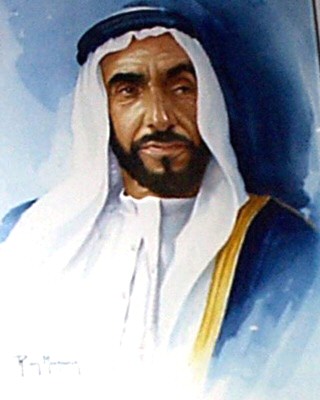 A number of sources have told Stratfor that Sheikh Zayed bin Sultan al-Nahyan, the ailing ruler of the United Arab Emirates (UAE), is close to death or has died. Like similar arrangements in many other monarchies on the Arabian Peninsula, the ruler’s eldest son, Sheikh Khalifa bin Zayed al-Nahyan, will succeed his father on the throne in the emirate of Abu Dhabi. However, because power is distributed among the president’s various sons, a fight for the UAE presidency could break out within the royal family - or beyond.
A Persian Gulf-based source told Stratfor late Oct. 14 that unconfirmed reports were circulating of the death - or near death - of United Arab Emirates (UAE) President Sheikh Zayed bin Sultan al-Nahyan. The sources said Sheikh Zayed had been taken to a London hospital because of failing health. The source also suggested the president’s entourage could be keeping his death a secret in order to claim the president died Oct. 15 - during the holy month of Ramadan. The consensus from various sources, however, is that the monarch is extremely ill and that discussions pertaining to succession have begun among his family in Abu Dhabi and the rulers of the six other emirates that make up the UAE federation.
Given the Islamic religious culture in the Arabian Peninsula, which calls for a quick burial of the deceased, it is likely Sheikh Zayed clings to life and that rumors of his death began to circulate after his physician intimated the president had very little time to live. Sheikh Zayed’s son, the crown prince of the largest emirate of Abu Dhabi, Sheikh Khalifa bin Zayed al-Nahyan, will succeed him as ruler of Abu Dhabi - and is expected to succeed him as UAE president. It is possible, however, that the presidential transition will not go as smoothly as the informal succession plan would suggest. Two of Sheikh Zayed’s other sons, who are half-brothers - or even an outsider - could vie for the presidency.
In fact, this presidential succession will be an historic event in the United Arab Emirates; Sheikh Zayed has ruled since the country was created in 1971. The crown prince is destined to follow his father as emir of Abu Dhabi and it is expected that he will assume the presidency of Abu Dhabi. That succession, however, is assumed under an informal agreement only.
Abu Dhabi is the most powerful of the UAE’s seven emirates - Dubai, Sharjah, Ra’s al-Khaimah, Al Fujairah, Umm al-Qaiwain and Ajman - because of oil, which would explain why the country’s Supreme Council has elected Sheikh Zayed as president for six successive five-year terms since 1971.
But because the succession process is not written in stone, sources close to the UAE, in particular sources close to the ruling family, say there could be several contenders for the presidency. Stratfor examines the possible scenarios:
1. Succession takes place in accordance with the established arrangement, and Sheikh Khalifa, son No. 1, takes over. He has a huge following of four major tribes in the west, south and east of the country and is considered extremely influential, though he is not as wealthy as son No. 3. That said, it is quite possible he would he be willing to sell the presidency in exchange for some other political and economic benefits.
2. Son No. 3, Sheikh Muhammad, becomes ruler. Commander of Abu Dhabi’s armed forces, Muhammad has a Western education, a good command of the English language and personifies the United Arab Emirates interface with the Western world. We are told he is materially more affluent than Sheikh Khalifa and is considered more qualified to run the country. Although he controls the police, army, intelligence and the ports, he has only about half the supporters of son No. 1. Would he make an offer of money for the post?
3. Son No. 2, Sheikh Sultan, succeeds his father. Sultan is well loved and widely respected by the people of the United Arab Emirates. However, two terrible automobile accidents some 25 years ago slowed him down, though he is not handicapped. He could possibly become president in name with son No. 3 as his deputy. This system is in play in the emirate of Dubai, where there is a nominal leader, but real power resides with his deputy.
4. There is an outside chance Dubai also could make a bid for the presidency. Given its power as the second largest emirate - and the fact that UAE’s prime minister and its vice president always have come from Dubai - it could join with smaller emirates and become a contender. Sources in Dubai told Stratfor the wife of a lower-level sheikh says the wives and families have standing orders to go to Oman or elsewhere in case of Sheikh Zayed’s death - because the power struggle could get ugly.
5. A more remote possibility is that Sheikh Zayed’s grandson - who has been schooled in the West - is named president. There is one precedent for a move of this nature. When Sheikh Zayed came to power as ruler of Abu Dhabi in 1966, he managed to break with tradition and name his son as crown prince instead of his brother. He overcame the obstacle by co-opting senior members of the family into the government.
6. The most remote possibility is that Sheikh Sultan bin Mohammed al-Qasimi, emir of Sharjah, would offer his candidacy. Sheikh Sultan’s tribe was the most powerful before the arrival of the British and the creation of the United Arab Emirates.
In essence, the struggle for the UAE presidency is likely to be an Abu Dhabi family affair, possibly involving Dubai as well. The exact direction and extent of the power struggle remains to be seen.
Strategic Forecasting, Inc.
October 15, 2004 |

 Contribuer